Calculations Belong Where They Are Applied
The filter integrity and leakage test on installed filter systems is one of the most demanding procedures in cleanroom qualification. Its parameters are defined once in the master data and then affect every measurement. Anyone maintaining them needs to know the underlying formulas – which until now meant looking up the specification, opening the flow chart and cross-checking the values.
Formula Help Right at the Parameter
Formula help is now built into the filter test master data. Every affected field shows a tooltip with the underlying formula and the variables involved. If you want the complete calculation path, a button opens it in a dedicated window – with all formulas in context instead of scattered individually. The display is available in all languages of the application.
Which Calculations Are Covered
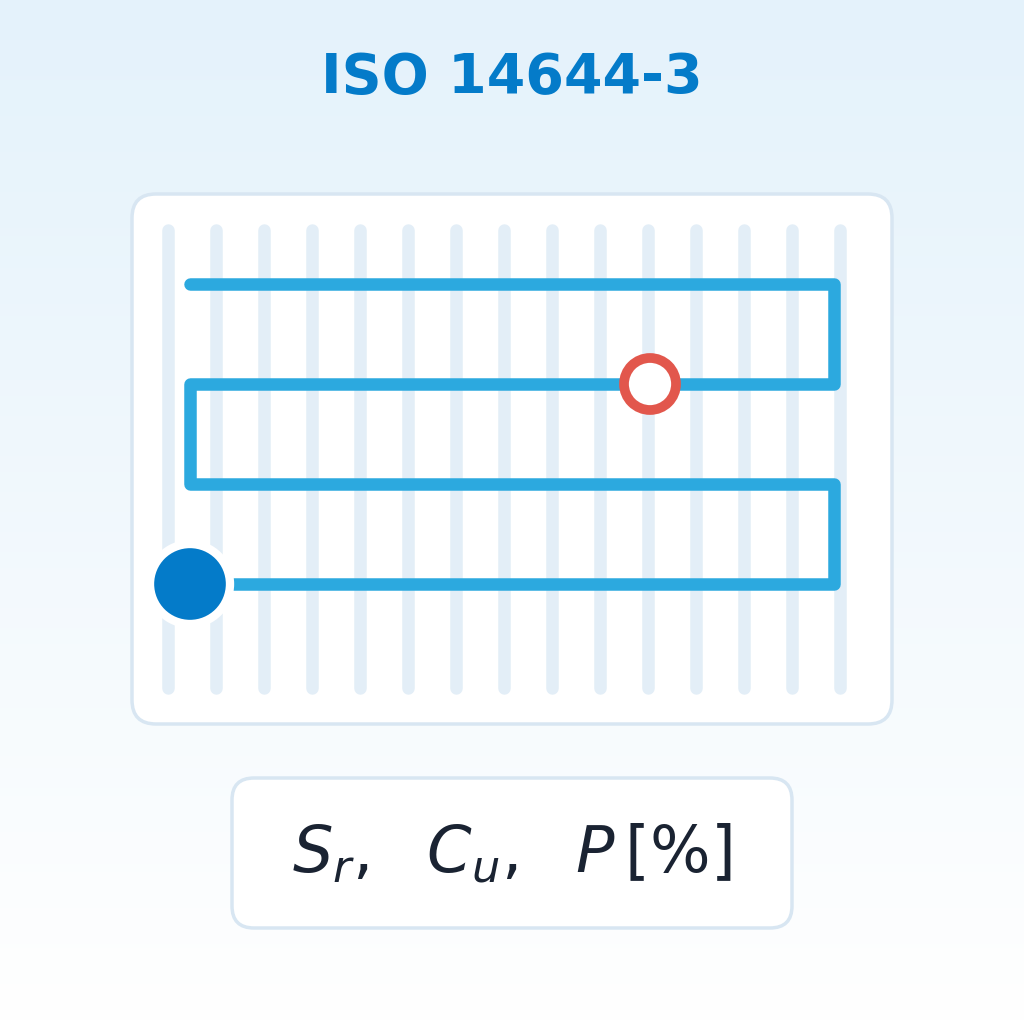
The formulas cover the quantities that actually have to be calculated in an installed filter leakage test according to ISO 14644-3:
- Upstream challenge concentration: The test aerosol concentration introduced ahead of the filter as the reference for every penetration assessment – including the dilution stage in use.
- Scan rate determination: The maximum speed at which the probe may be moved across the filter face so that a leak of the permitted size is reliably detected. It depends on probe area, sample flow rate and the required detection level.
- Permitted penetration: The limit above which a location counts as a leak – derived from the upstream concentration and the filter class.
- Dilution stage: The factor used to convert the measured concentration back to the actual value when working above the particle counter measuring range.
Fewer Queries, Faster Onboarding
The practical benefit shows most clearly when onboarding new colleagues and during audits: the question "where does this limit come from?" can be answered directly on screen, without anyone having to retrieve the specification. At the same time the risk of maintaining a parameter based on a wrong assumption drops significantly.
Transparent formulas are not a convenience – they are part of data integrity!